The Birds Thank You for Native Plants!
Compiled by Joyce Tuharsky, Wild Ones River City Chapter Member
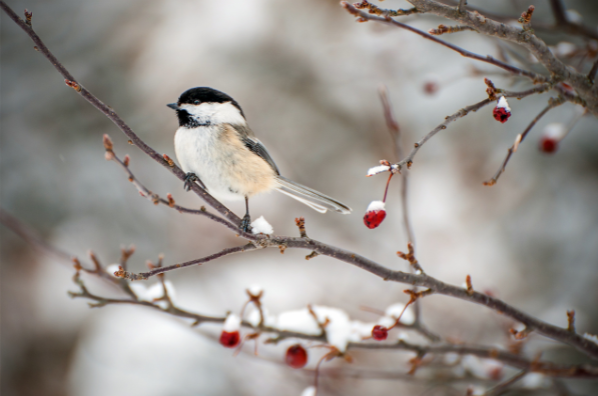
Native plants produce berries and other fruits that provide crucial, high-energy food for birds in winter, when other food is limited. The following plants help birds survive the coldest months:
Dogwoods (Cornus sp.): Dogwood berries appear in early fall and often persist through the winter, though a bit shriveled. They are high in fat and nutrition, attracting birds such as woodpeckers, juncos, vireos, bluebirds, thrushes, and even wild turkey. Red osier dogwood (Cornus sericea), with its striking red stems, is particularly beautiful in winter. Other dogwoods native to Michigan include Flowering dogwood (Cornus florida), Pagoda dogwood (Cornus alternifolia), Gray dogwood (Cornus racemosa), and low-growing Bunchberry (Cornus canadensis).
Elderberry (Sambucus sp.): Common Elderberry (Sambucus nigra ssp. canadensis) shrub produces deep purple berries in early fall that are a magnet for birds. The fruit is high in sugars and carbohydrates that help build fat reserves needed for migration or enduring the winter. Elderberry thickets provide excellent winter shelter. In spring, the enormous clusters of Elderberry blooms attract many insects—also food for birds. Red Elderberry (Sambucus racemosa L.) is also native to Michigan. It has red berries that are also beneficial to birds.
Hollies (Ilex sp.): Holly plants boast vivid red berries that ripen in fall and persist through winter. Birds safely consume these berries, despite being somewhat toxic to some animals. Holly plants are dioecious, meaning only female Holly plants produce fruit, requiring a male plant nearby for fertilization. Hollies native to Michigan include American Holly (Ilex opaca) and Winterberry (Ilex verticillata)—also known as Michigan holly).
Junipers(Juniperus sp.): Female juniper plants produce beautiful blue “berries” which are actually wax-covered cones that are soft and fleshy. The nutritious seeds inside are favored by many birds. These hardy fruits ripen in fall and can remain on branches all winter. The dense evergreen branches of junipers offer shelter to birds when other trees are bare. Species native to Michigan include Eastern red cedar (Juniperus Virginiana), Creeping juniper (Juniperus horizontalis), and Ground juniper (Juniperus communis var. depressa).
Pokeweed (Phytolacca americana): Considered a weedy pest by many gardeners, American Pokeweed spreads so easily because many birds eat the blue-black berries that persist into winter.
Roses (Rosaceae sp.): Rose hips are often ignored as the fruit of roses. Varying in size and color, rose hips often persist through the winter, providing treats for birds and other wildlife. There are several rose species native to Michigan with the most common being the Swamp Rose (Rosa palustris), Pasture Rose (Rosa carolina), and Prairie Rose (Rosa setigera).
Sumac(Rhus sp.): Different species of sumacs grow as both shrubs and small trees in a variety of environments. Their clusters of furry, red berries are sour and low in fat, so birds often pass them by. But deep in winter, when other food is scarce, birds will eat these long-lasting berries. Sumac species native to Michigan include Fragrant sumac (Rhus aromatica),Smooth sumac (Rhus glabra), Staghorn sumac (Rhus typhina), and Winged sumac (Rhus copallinum).
Viburnum (Viburnum sp.): These hardy shrubs or small trees produce beautiful blossoms in spring, attracting many pollinators, and berries that persist through winter, providing essential nutrients for birds. Species native to Michigan include Downy arrowwood (Viburnum rafinesquianum), Highbush cranberry (Viburnum trilobum), Mapleleaf viburnum (Viburnum acerifolium), Blackhaw (Viburnum prunifolium), and Nannyberry (Viburnum lentago).
Virginia creeper (Parthenocissus quinquefolia): Common in much of the US, even in urban areas, this vine produces small hard purplish-black berries in early fall. Although toxic to humans, these berries provide an important winter food for several bird species.