Description
Rattlesnake Master, Eryngium yuccifolium
QUART POT
Light: Full Sun
Moisture: Dry to medium-wet, tolerates drought
Soil: Prefers sandy soil, tolerates clay or shallow rocky soil
Height: 3–6 feet
Bloom Season: June–Sept
Bloom Color: White
Deer Resistant: Yes, due to prickly foliage
Benefits: Pollinators
Notes:
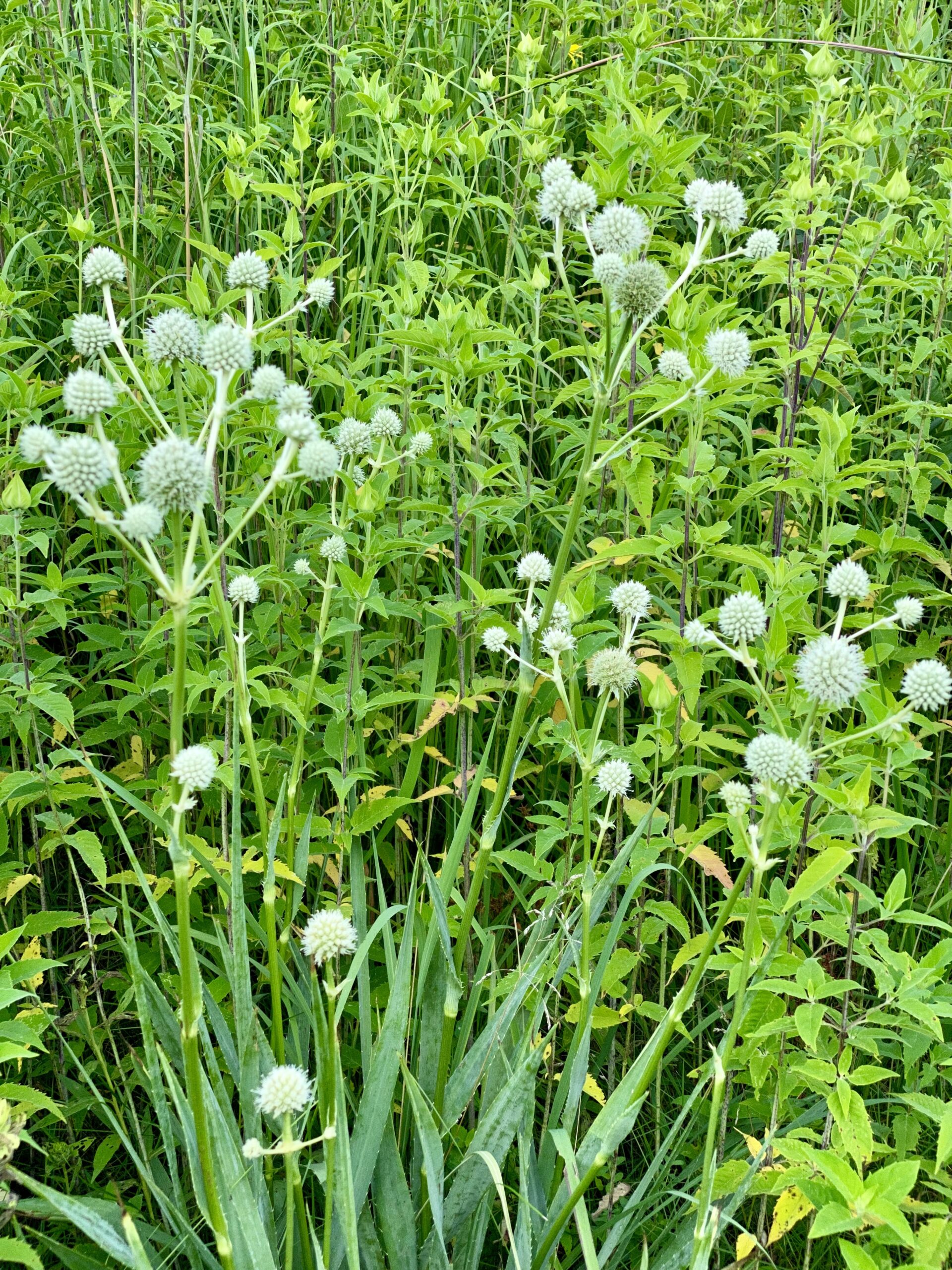
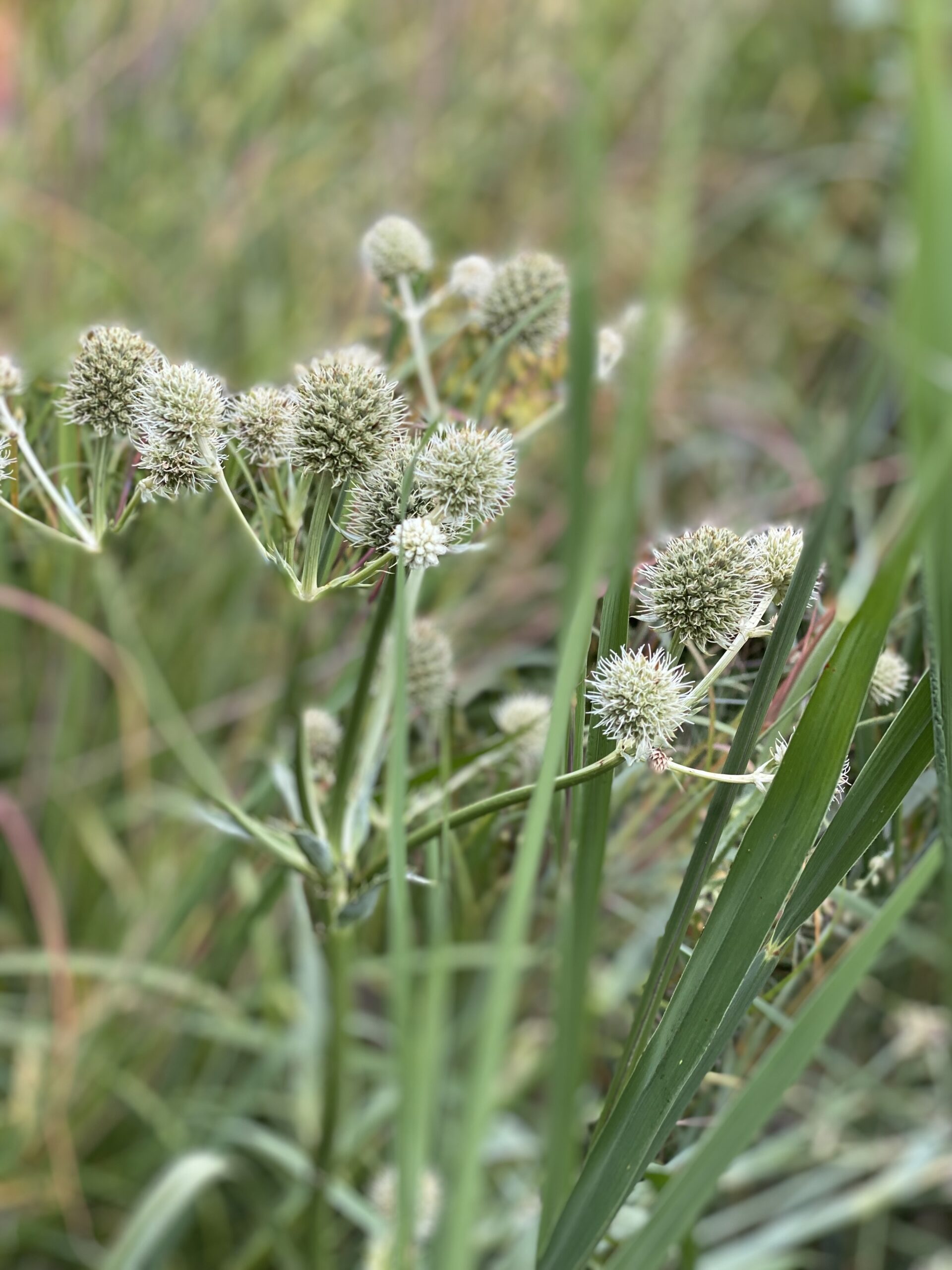
Although resembling a yucca or other desert plants, Rattlesnake Master is a member of the carrot family. Its stiff, narrow, sword-shaped leaves grow up to 3 feet long, tending to form a dense clump near the base of the plant. A few smaller, widely scattered leaves occur along the upper portions of 3–6-foot stems. The entire plant is bluish to grayish green and spreads 2 to 3 feet wide.
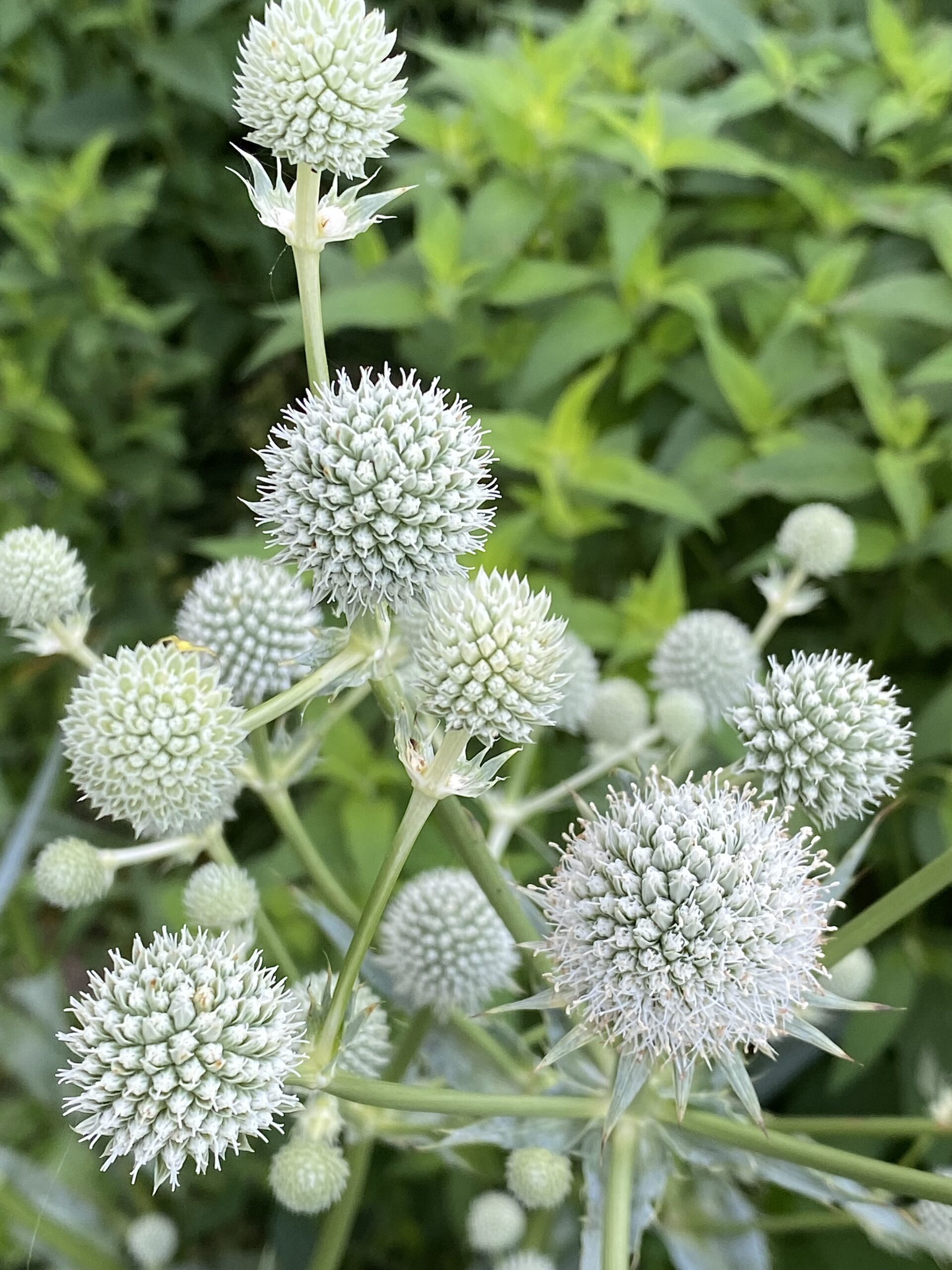
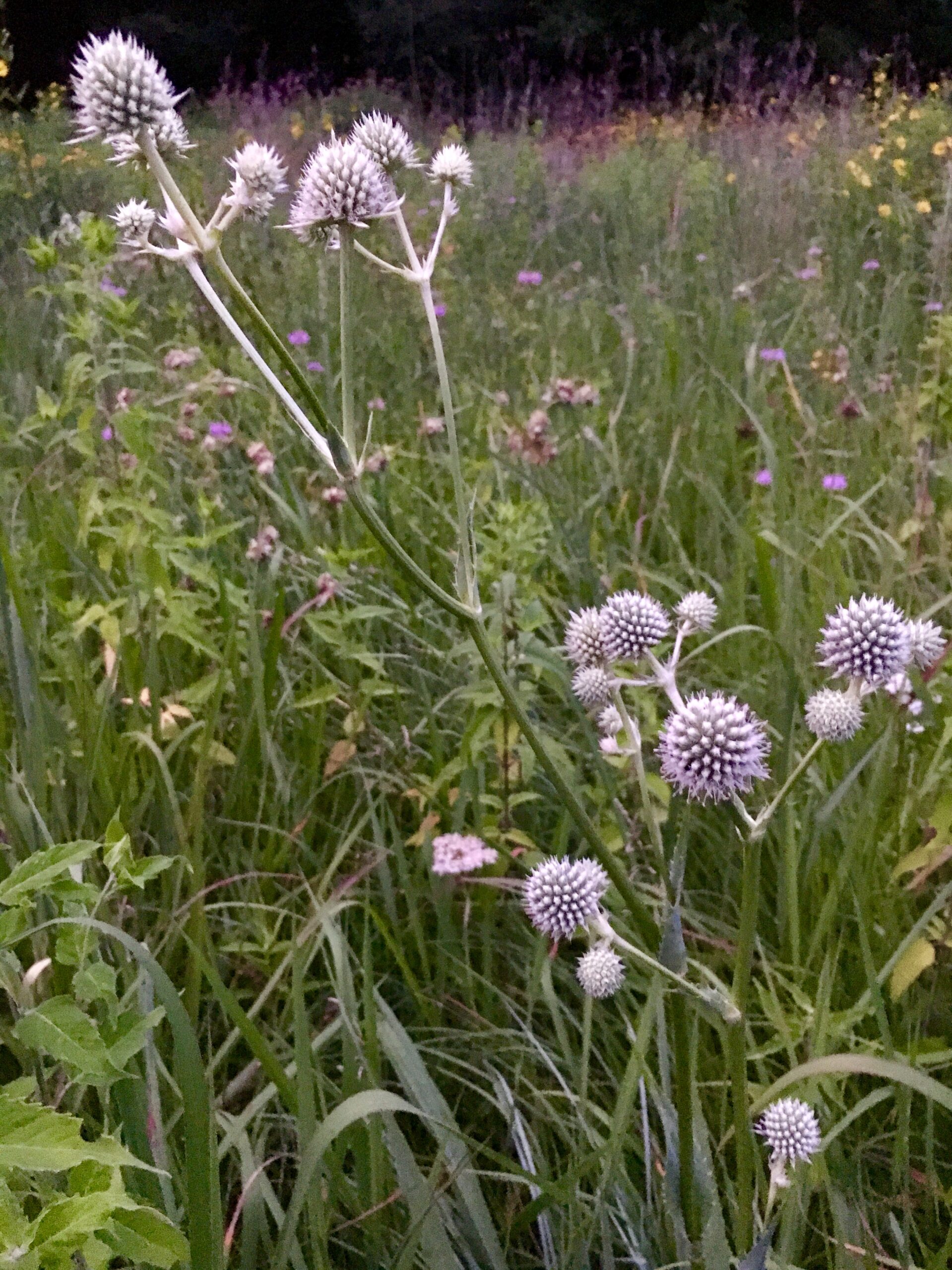
From June through September, Rattlesnake Master produces dense ball-like flowerheads at the top of the stiff stems. About 1-inch in diameter, each ball consists of numerous tiny white flowers. Whitish bracts stick out sharply from the flowers, giving the flower head a rough, prickly feel and appearance. As the flowers mature, the showy balls develop a bluish cast and later turn brown, filled with 1/4-inch-long brown seeds.
The flowers are magnets for pollinators such as butterflies, skippers, moths, long and short-tongued bees, wasps, flies, and beetles.
With its unique sculptural form, Rattlesnake master makes a statement in any garden. This plant has no serious insect or disease problems. However, it can sprawl if grown in shade or overly fertile soil, needing support. Massing this species with other tall plants can be a solution. Rattlesnake Master has a very deep central taproot so does not transplant well. The fresh or dried flower heads make a distinct addition to flower arrangements.
Photos by Ruth Oldenburg