Wet, Wild, and Rare: Understanding Michigan’s Fens and Bogs
Recap by Sandra Bergh, Wild Ones River City Vice President and Programs Chair
Our March program, “Wet, Wild, and Rare: Understanding Michigan’s Fens and Bogs”, was held on March 16 as a Zoom Webinar. Our speaker, Ben Botwinski, is the director of the Lansing Public Schools’ Ebersole Center in Wayland, Michigan. Ben led the audience through a brief summary of the water cycle, emphasizing aspects especially important for fens and bogs. He then engaged us in determining our local watershed and discussing the importance of wetlands. He described the various types of wetlands before delving into fens and bogs. We learned how these 2 types of wetlands form and that the main difference between them is that fens are in contact with the groundwater, while bogs receive water only through precipitation.
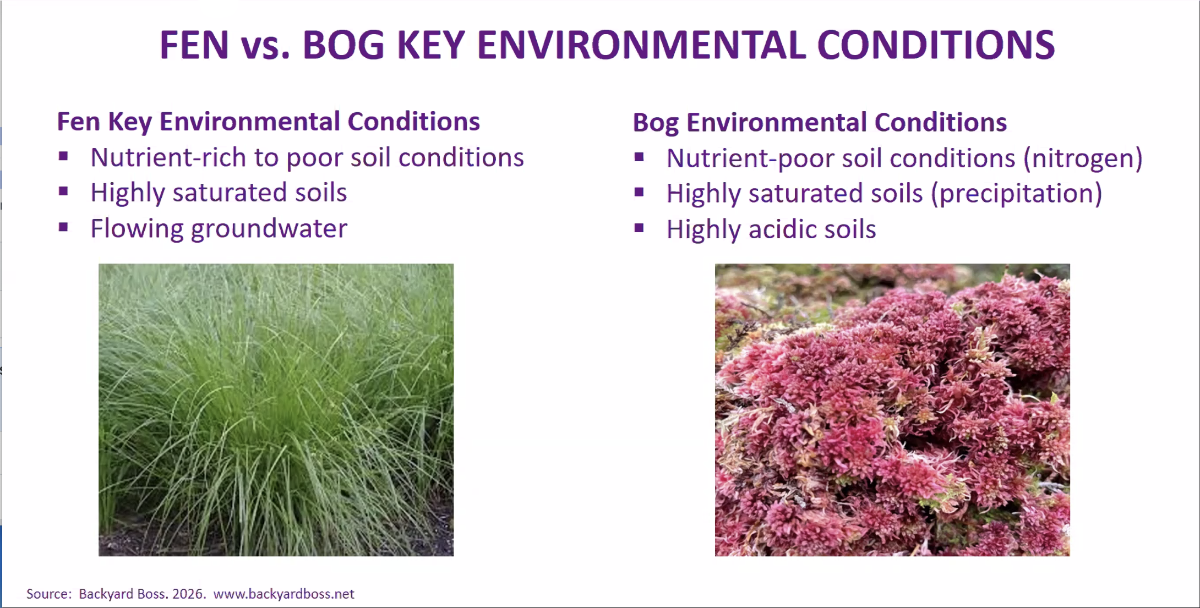
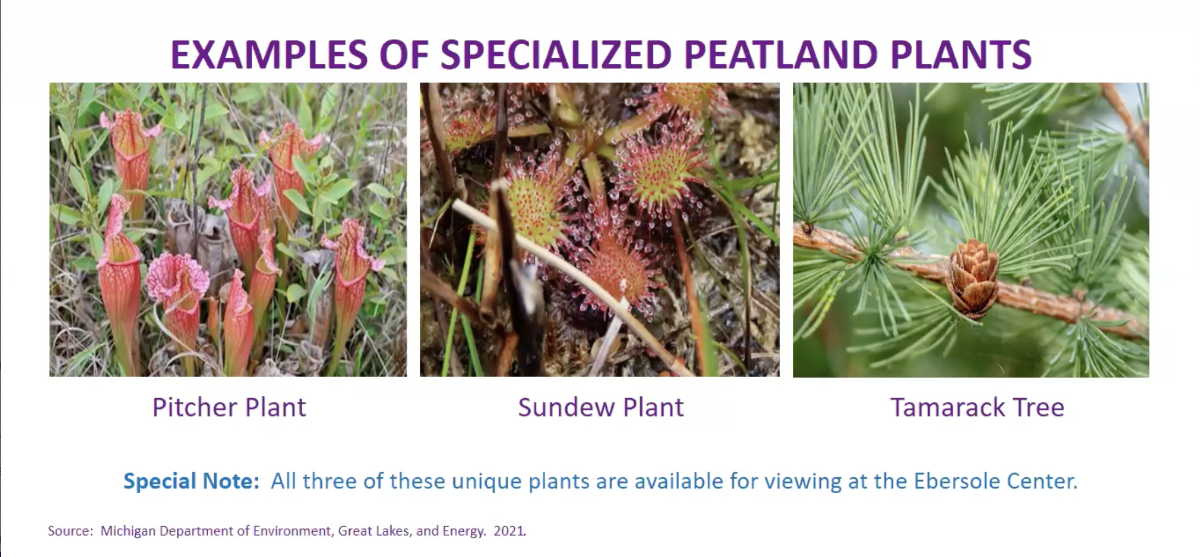
We also learned how peat develops over time, and that we can help protect these sensitive ecosystems by avoiding the use of peat in our yards. We also learned about the types of plants and animals found in fens and bogs, and the interesting adaptations some plants have made in order to survive in a nutrient-poor environment. Ben ended his presentation with an invitation for River City Wild Ones Members to come to the Ebersole Center to see the fens and bogs present there.
Links for resources shared by Ben Botwinski:
Grand River Fisheries Assessment
Kalamazoo River Hydrologic Study
Michigan Watersheds Map
Michigan Natural Features Inventory
Linking Land & Lakes: Protecting the Great Lakes’ Coastal Wetlands
Photos courtesy of Ben Botwinski