
Natives to Know – Orchids
Compiled by Joyce Tuharsky
1,500 years ago, a Chinese poet/painter, San KoKu, was so inspired by an orchid that he proclaimed it the embodiment of nobility—epitomizing strength, elegance, purity, and humility. To this day, the orchid remains a symbol of excellence in many Asian societies. It is an example of how indigenous plants have inspired human cultures through the centuries.
Orchids belong to the Orchidaceae family, a diverse and widespread group of flowering plants found in almost every habitat on earth, the richest diversity of which exists in the tropics.
Michigan is home to 57 species of orchids! …according to the University of Michigan’s Michiganflora.net. Because of its geographic position, glacial history, lake-influenced climate, and varied soil types, the Great Lakes region encompasses many diverse habitats in which orchids have evolved and thrived.
Characteristics of orchids include bilateral symmetry of the flower, two lateral petals and a third petal modified into a “lip” or landing pad for pollinators, fused stamens and carpels, and extremely small seeds. Many orchids have ovaries that are twisted and inverted so that, rather than entering downward, pollinators must crawl upward into the flowers.
Orchids often require unique growing conditions such as specialized pollinators, underground mycorrhizal fungi for seed germination and root growth, and specific climate conditions. As a result, orchids transplanted from the wild into gardens rarely survive. It is often illegal anyway, since about half of all orchids native to North America are listed as threatened or endangered and are protected.
Below is a sampling of orchids native to Michigan:
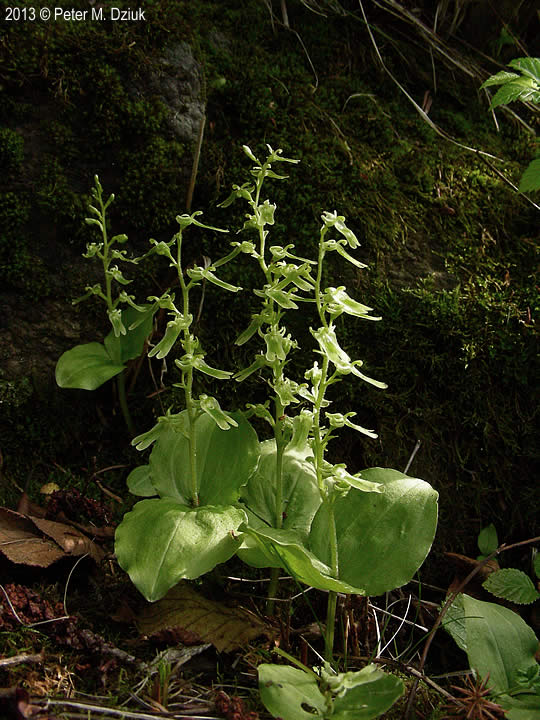
Auricled Twayblade, Neottia auriculata – Small, hard-to-see orchid that grows only 4–10 inches tall. It has pale, greenish-white, translucent-looking flowers. Rare, it grows in cold sandy or humus-rich soil along streams.
Photo by Peter M. Dziuk
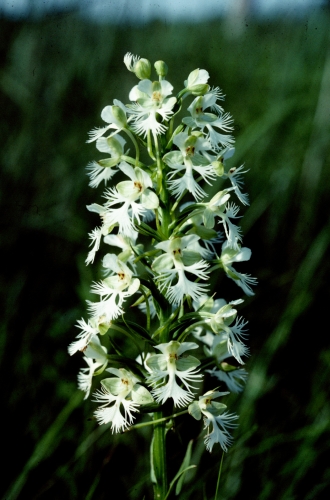
Eastern Prairie Fringed Orchid, Platanthera leucophaea – Fringed white blossoms with a long nectar spur that restricts pollination to certain moths, making it highly specialized. Grows to 40 inches tall.
Photo by Alan Cressler
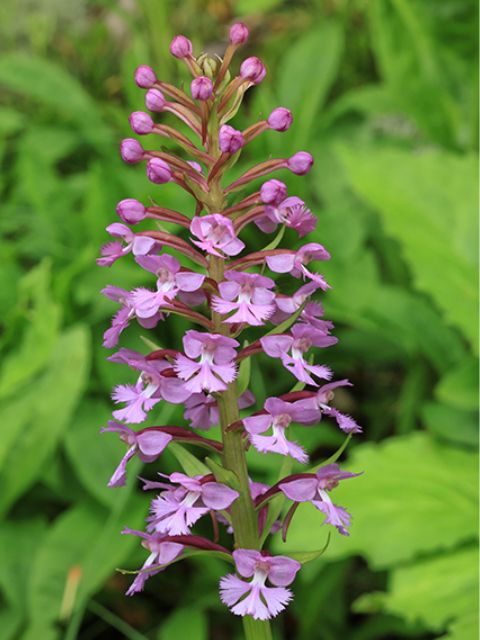
Lesser Purple Fringed Orchid (Platanthera psycodes) – Features showy purple flowers with fringed petals densely clustered along 10-inch-long racemes. Grows to 3 feet tall.
Photo by Susan R. Crispin
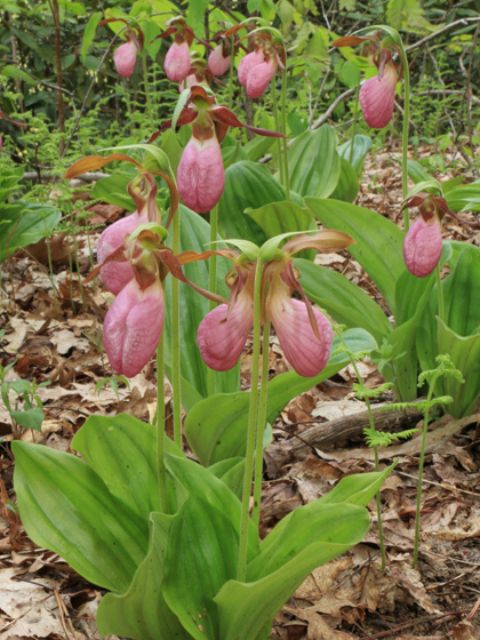
Pink Lady’s Slipper, (Cypripedium acaule Ait.) – Striking pink flower with a large slipper-shaped pouch and two opposite basal leaves with conspicuous parallel veins. Michiganders often think of this plant when they hear the word “orchid.”
Photo by Alan Cressler
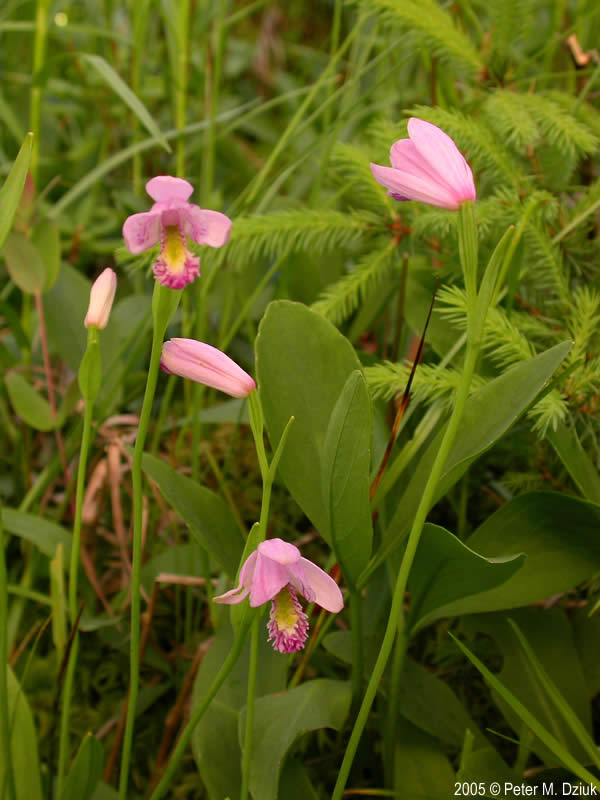
Rose Pogonia, Pagonia ophioglossoides – Pink to white flowers with several rows of pink, purple, or yellow hairs along the edges, giving the flowers a bearded look. Pollinated by several species of bumblebees.
Photo by Peter M Dziuk
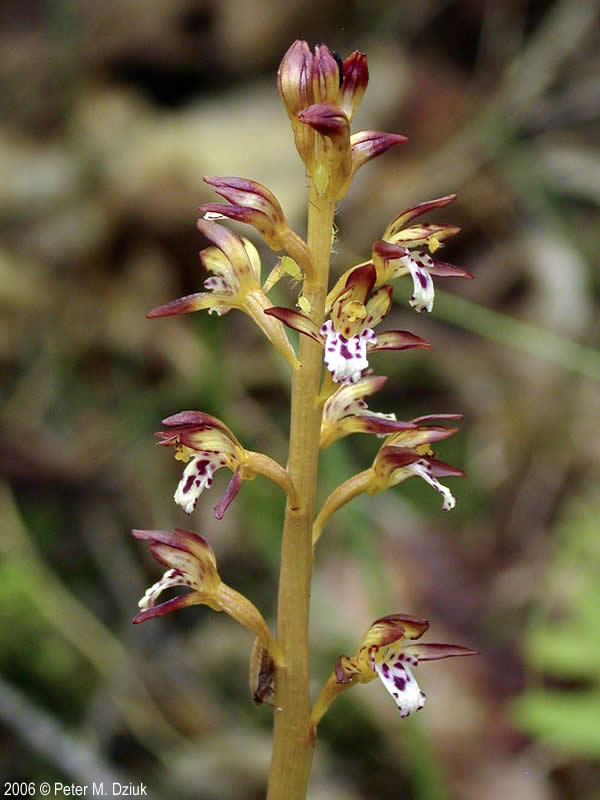
Spotted Coral Root, Corallorhiza maculata – Lacks chlorophyll and cannot photosynthesize, obtaining nutrients by parasitizing fungi in the soil. The small, intricate flowers have long, pointed sepals that are dark red, tinged with purple, and a “lip” that is bright white with magenta spots.
Photo by Peter M Dziuk
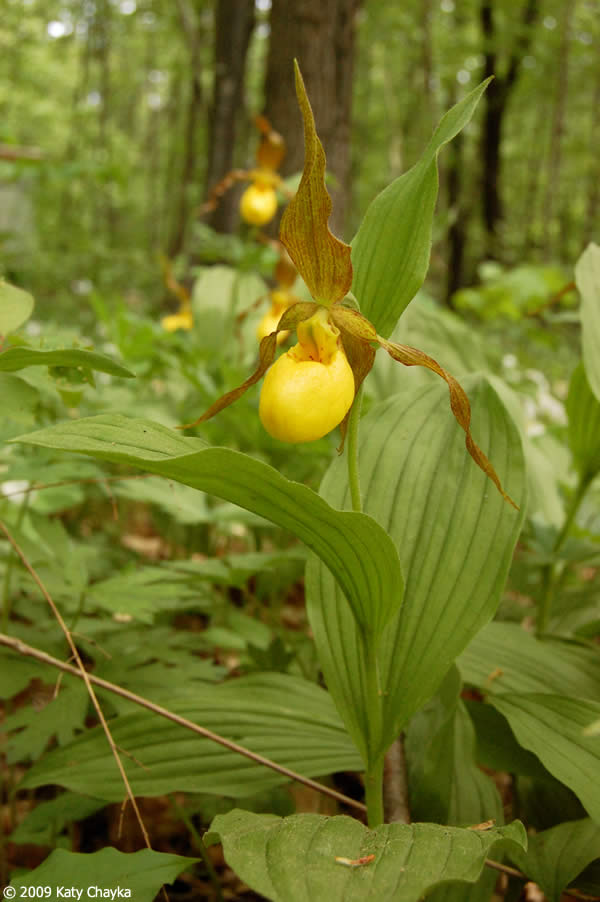
Yellow Lady’s Slipper (Cypripedium parviflorum) – Common orchid with a bright yellow, 2-inch-long pouch and green sepals that are spotted red. One of few orchids native to North America that has been cultivated and can be purchased.
Photo by Katy Chayka