Description
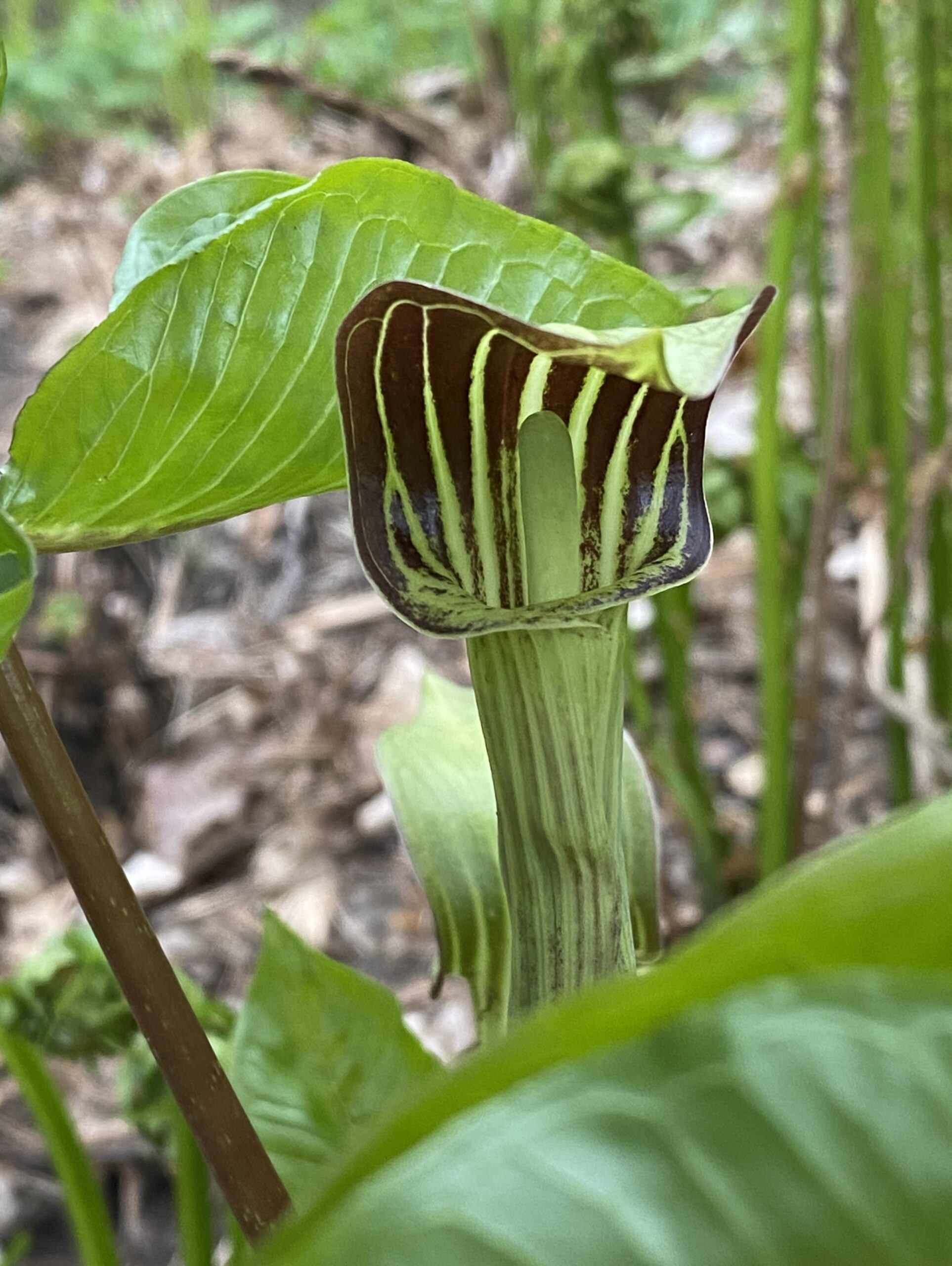
Jack-in-the-pulpit, Arisaema triphyllum
QUART POT
Light: Part Sun, Shade
Moisture: Medium to Wet
Soil: Humus, Rich
Height: 1–2 feet
Bloom Season: April–June
Bloom Color: Green with green and/or purplish stripes
Notes:
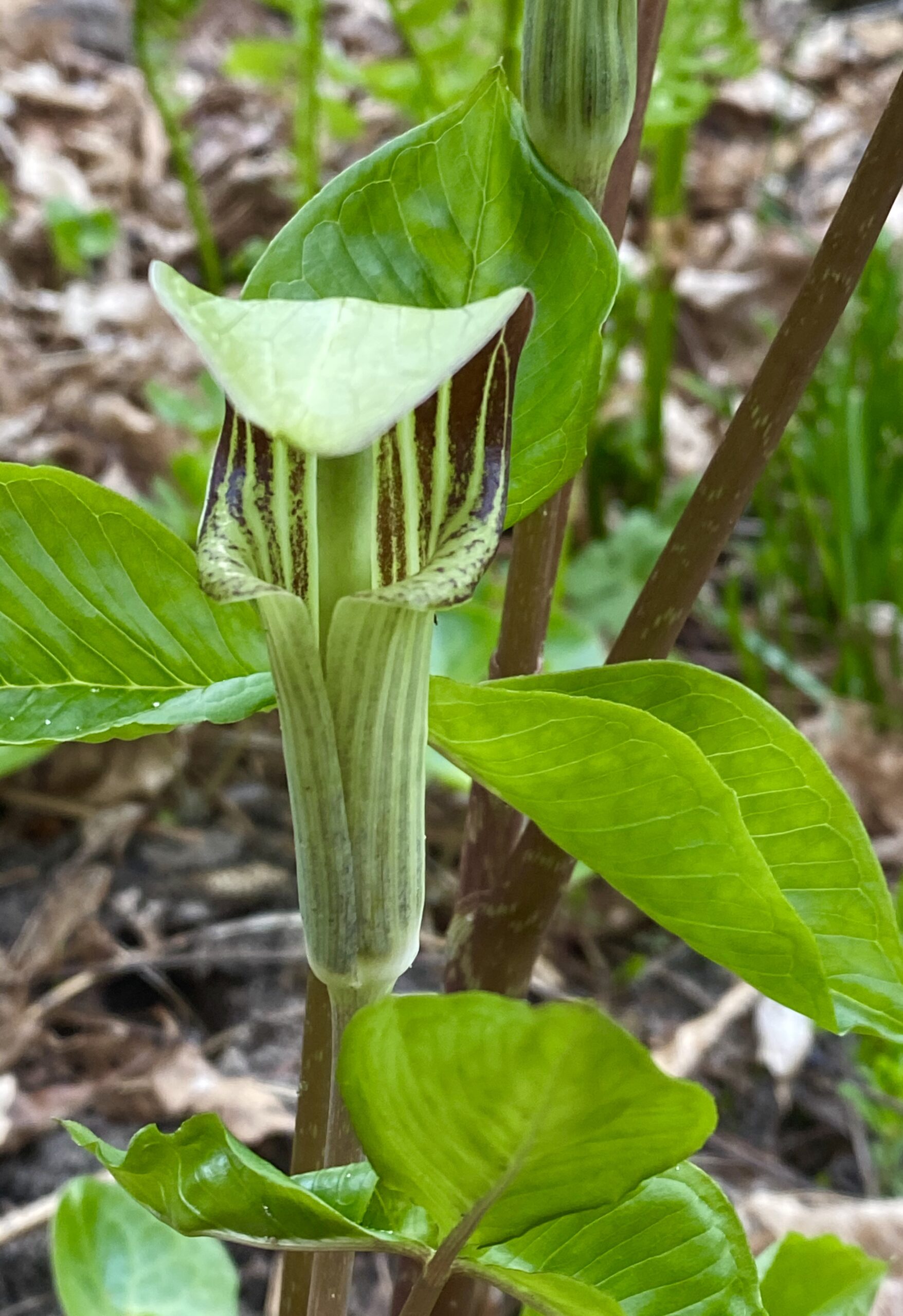
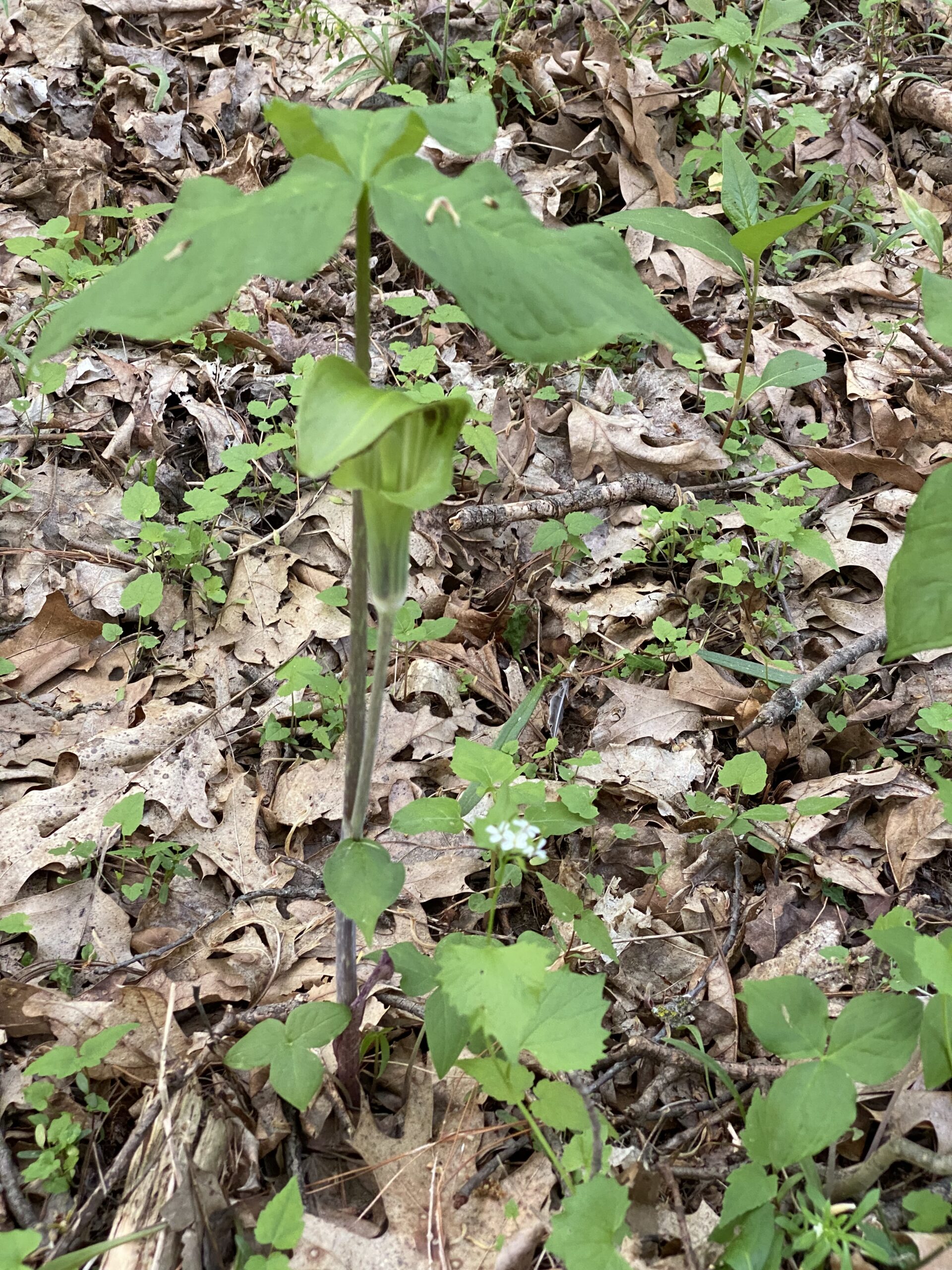
Jack-in-the-Pulpit leaves look somewhat like trillium. The leaves are compound with three leaflets and they are deeply parallel veined, looking like a fish bone. Most at home in woods that are wet in the spring and fall, this plant can stand drier conditions in the garden.
The flowers are unusual looking with a protective striped cup called a spathe. Inside the spathe is the inner spadix which contains the reproductive parts. The spadix is actually a column of closely packed tiny flowers. Other plants that have these structures are skunk cabbage and the arums. Jack-in-the Pulpit plants are either male or female, but can change sexes when needed.
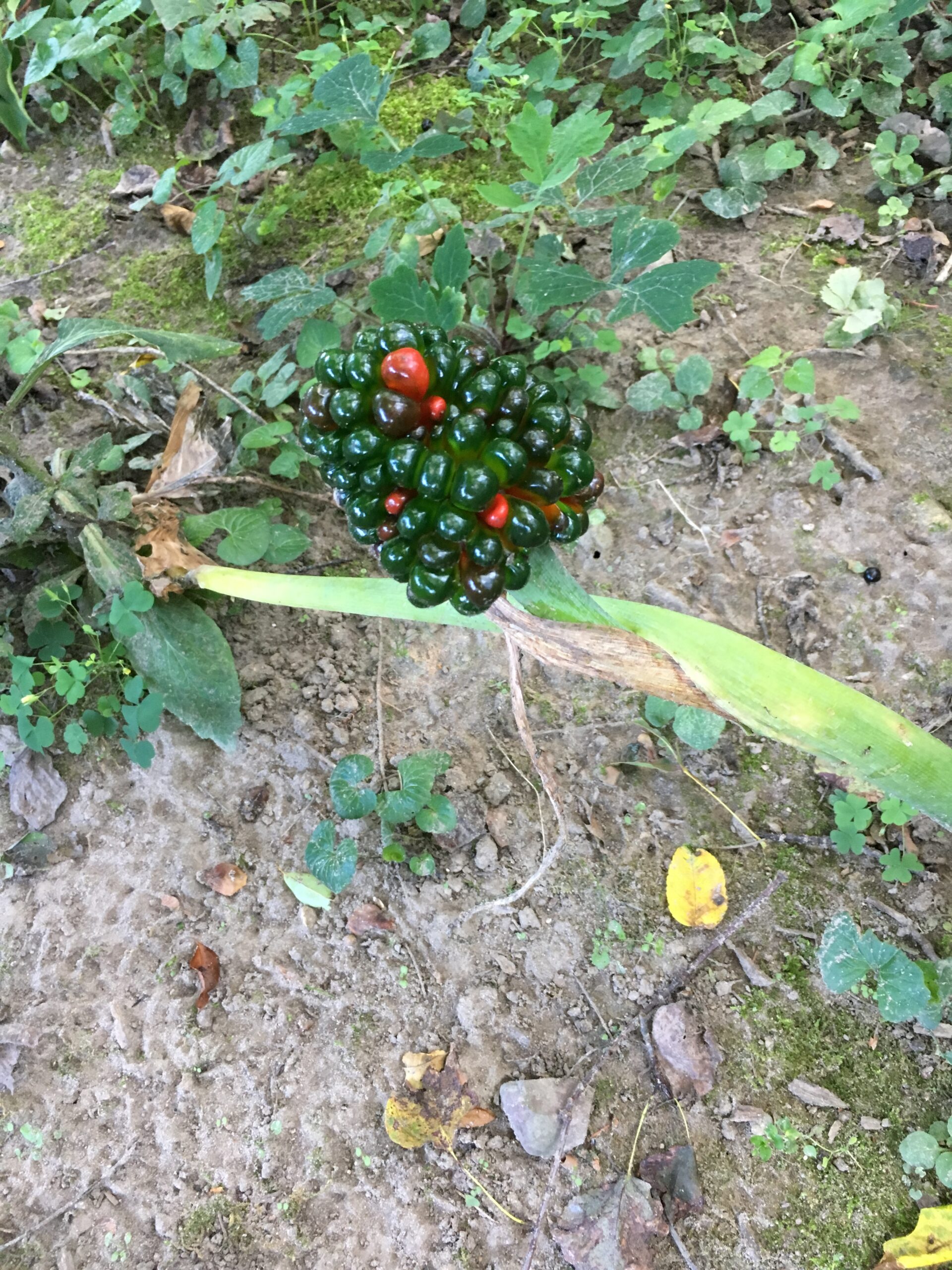
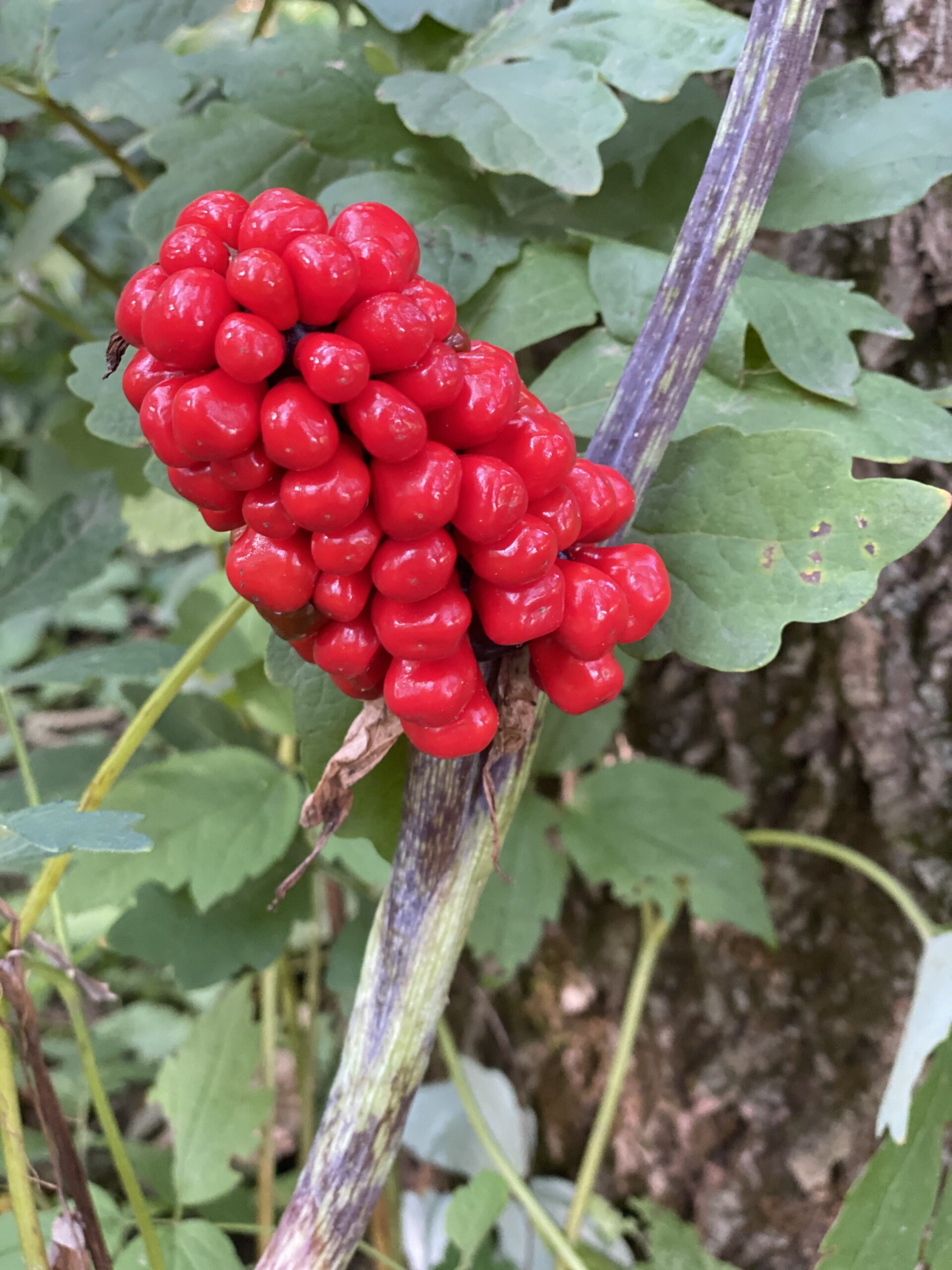
Once pollinated, a cluster of green berries will form that will eventually turn a tempting color of bright red. Inside each berry are one to a few smooth, cream colored seeds. The covering of the berry contains oxalates that can cause a burning sensation on the skin. As the season progresses the stalk of the flower elongates and the bunch of berries may stay upright, or they may flop. Seeds are spread this way and also by woodland birds who eat them.
The flowers on the spadix are very small so pollinators include fungus gnats, among other small insects (per Illinois Wildflowers).
Companion Plants: Tufted loosestrife, bishop’s cap, fowl manna grass, brome-like sedge, sensitive fern, cinnamon fern