Description
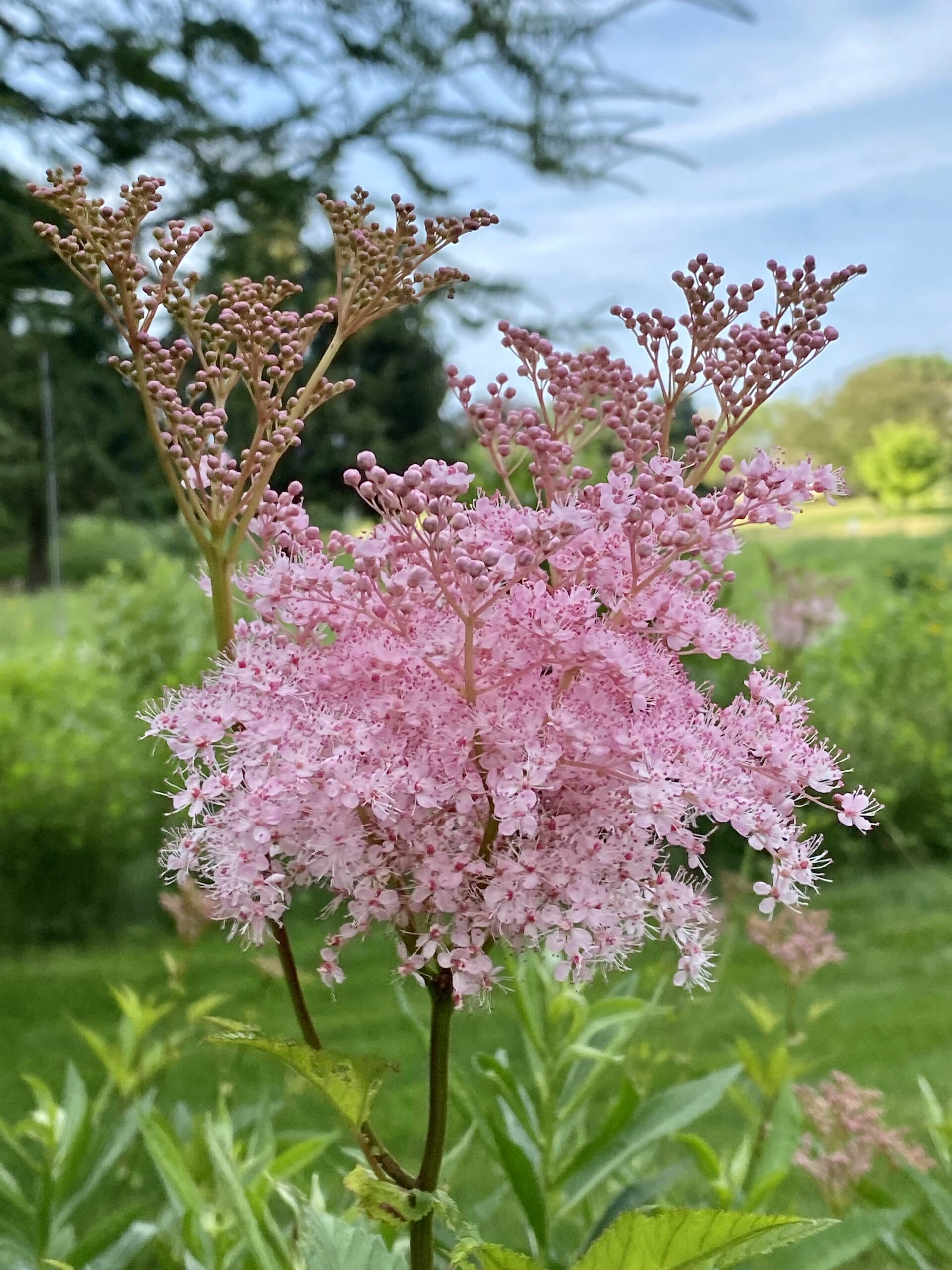
Queen of the Prairie, Filipendula rubra
QUART POT
Light: Full to Part Sun
Moisture: Medium to wet, intolerant of drought
Soil: Fertile, humus-rich
Height: 5–8 feet, often shorter
Bloom Season: June–August
Bloom Color: Pale pink to magenta
Deer Resistance: Tolerates
Benefits: Pollinators
Notes:
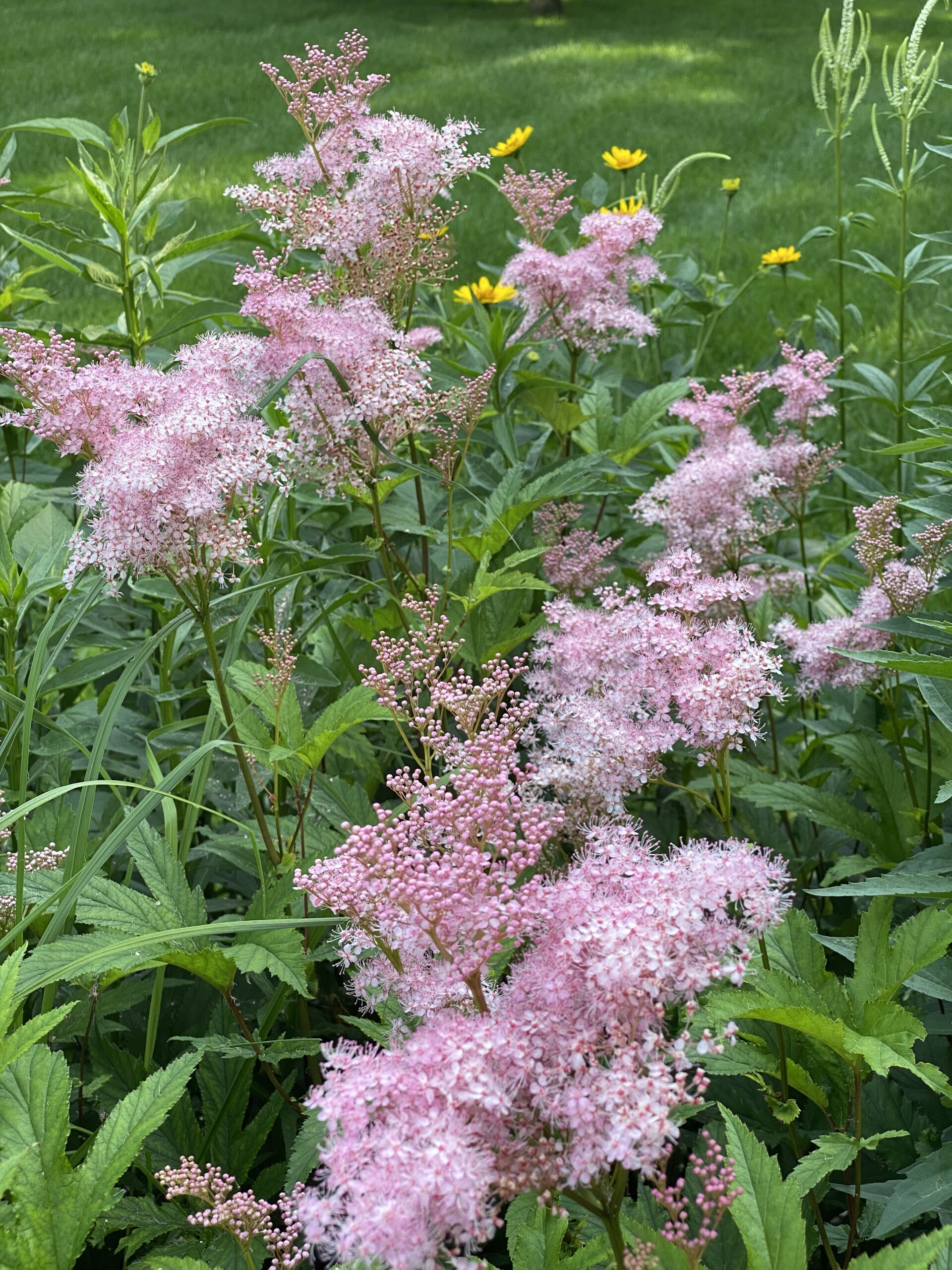
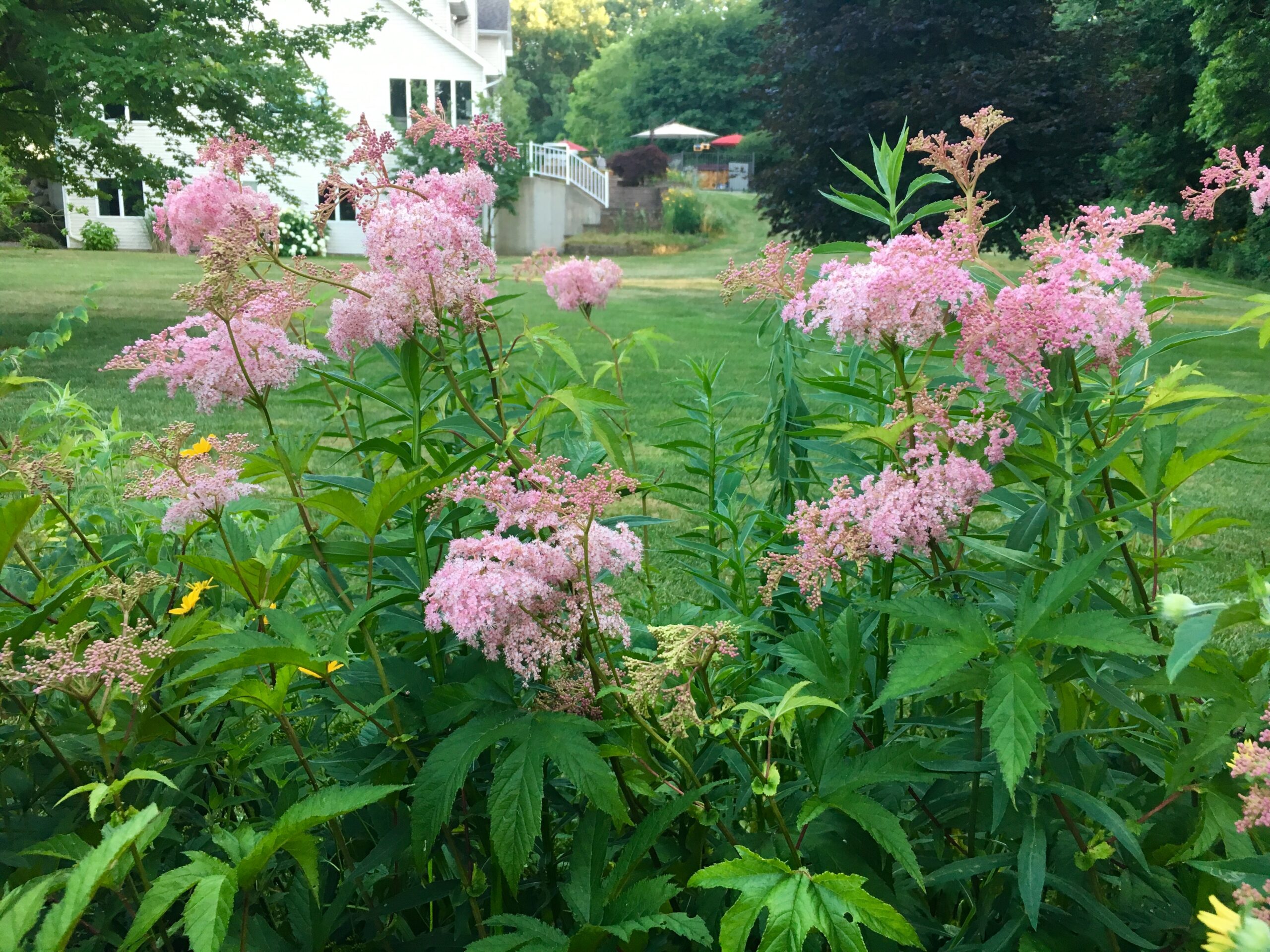
The Queen of the Prairie lives up to its name with its grand stature, abundant sprays of feathery pink blossoms, and attractive foliage.
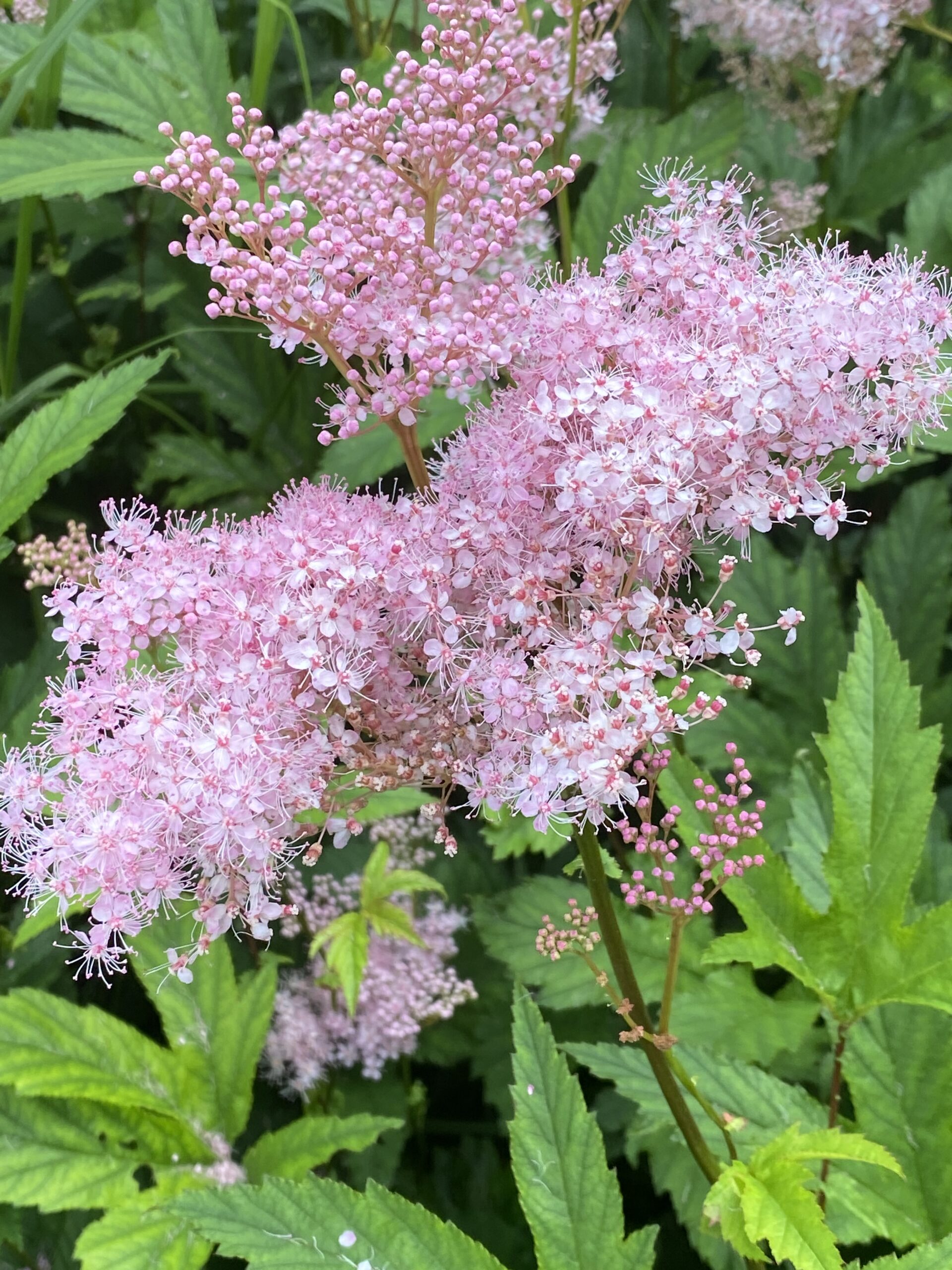
In early to mid-summer, profuse clusters of small, fragrant blooms burst out from atop the tall Queen of the Prairie stalks. Numerous long stamens give the flowers a fuzzy appearance that seem to float above surrounding plants. The color saturation often increases as the flowers mature, ranging from faint pink to rich magenta. The flowers attract numerous pollinators including butterflies, bees, flies, and beetles.
Queen of the Prairie grows very tall as an upright, clump-forming perennial, with more and more stalks sprouting as a plant becomes older. The leaves are bright green, compound, with 7–9 deeply lobed leaflets, and up to 3 feet long. The foliage makes this a stunning plant, even after the show stopping flowers are spent.
Queen of the Prairie is spectacular when massed at the rear of borders, in prairie or wet meadows, or along streams or ponds. It can also be used as an accent plant in smaller gardens or among mixed shrubs. It prefers full sun, but does not tolerate drought and appreciates some shade in hot, dry locations. Can form large colonies in optimum growing conditions. Divides easily.