Description
Wild Quinine, Parthenium integrifolium
DEEPOT 2.75″ x 10″
Light: Full Sun
Moisture: Medium, Moist
Soil: Clay, Loam, Sand
Height: 3–4 feet
Bloom Season: June, July, Aug, Sept.
Bloom Color: White
Benefits: Pollinators, Long Blooming, Deer Resistant
Notes:
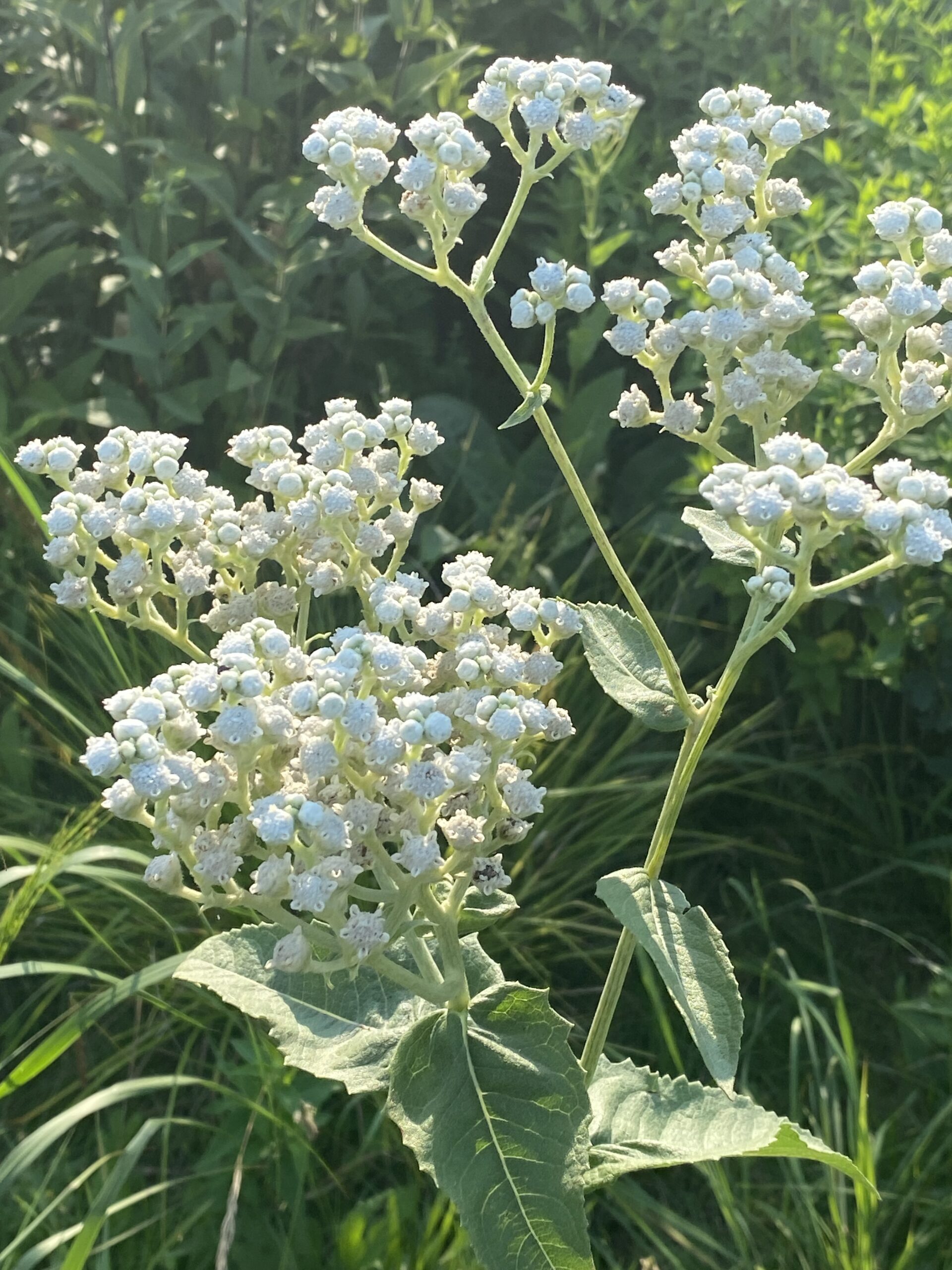
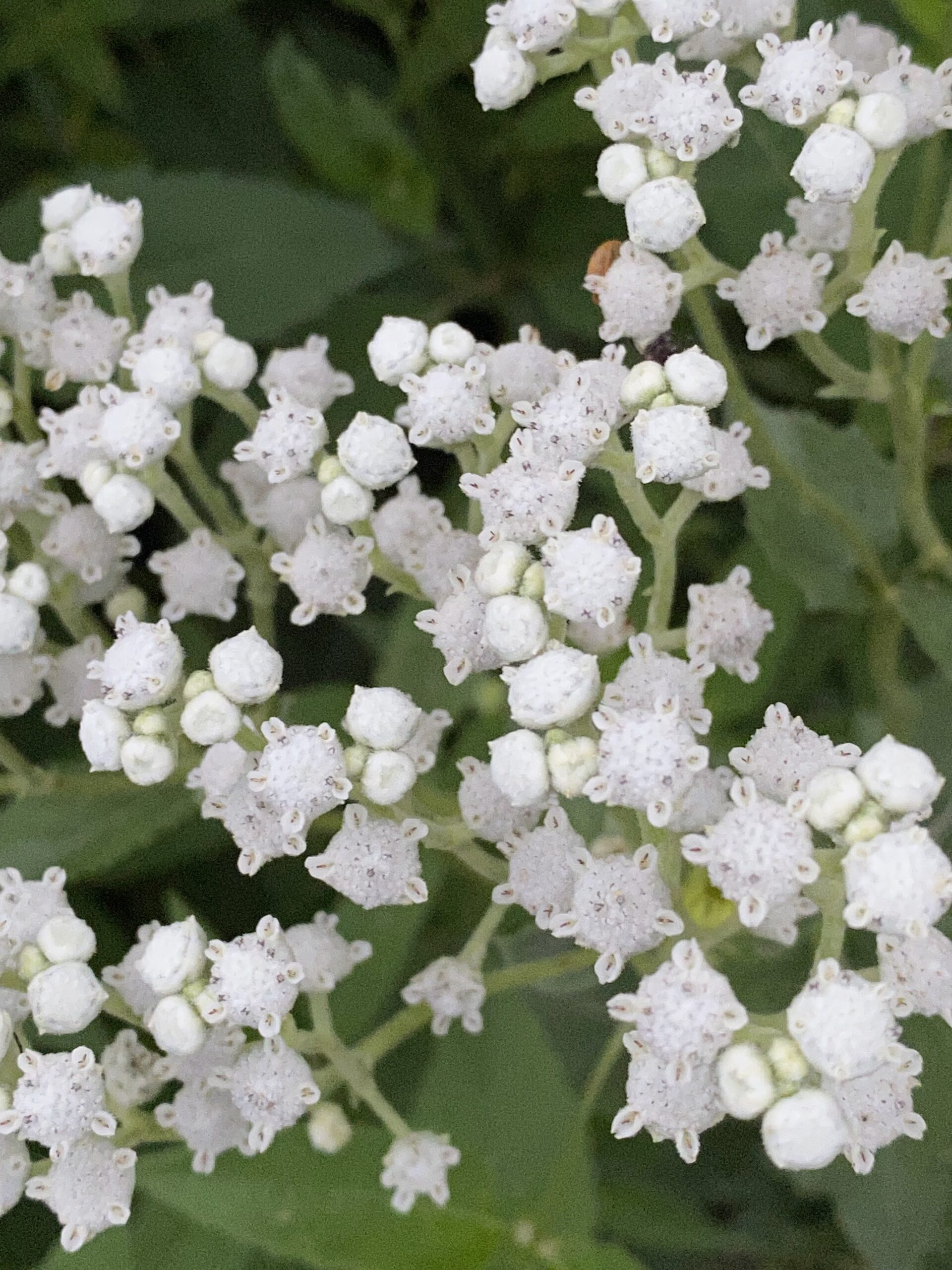
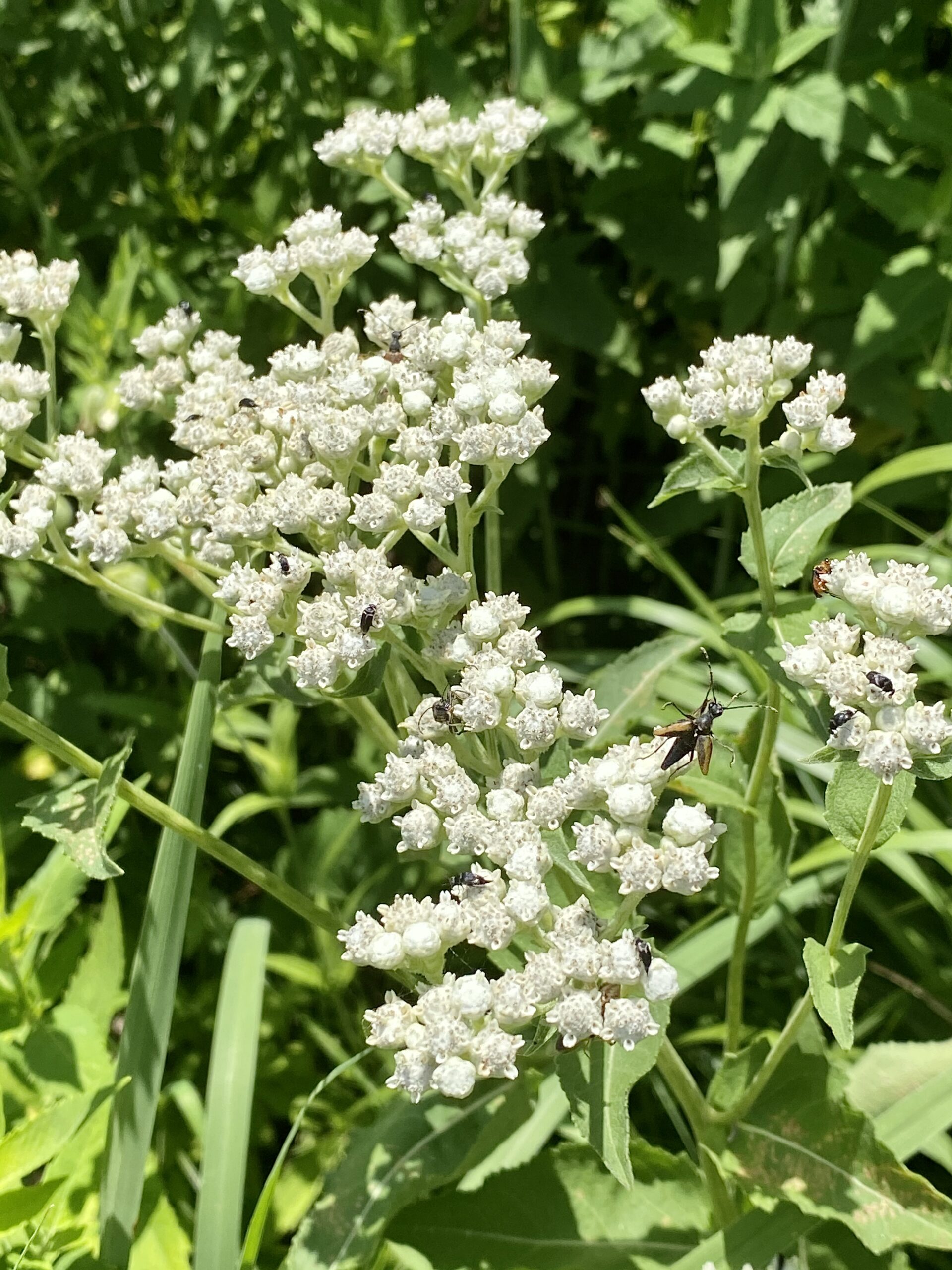
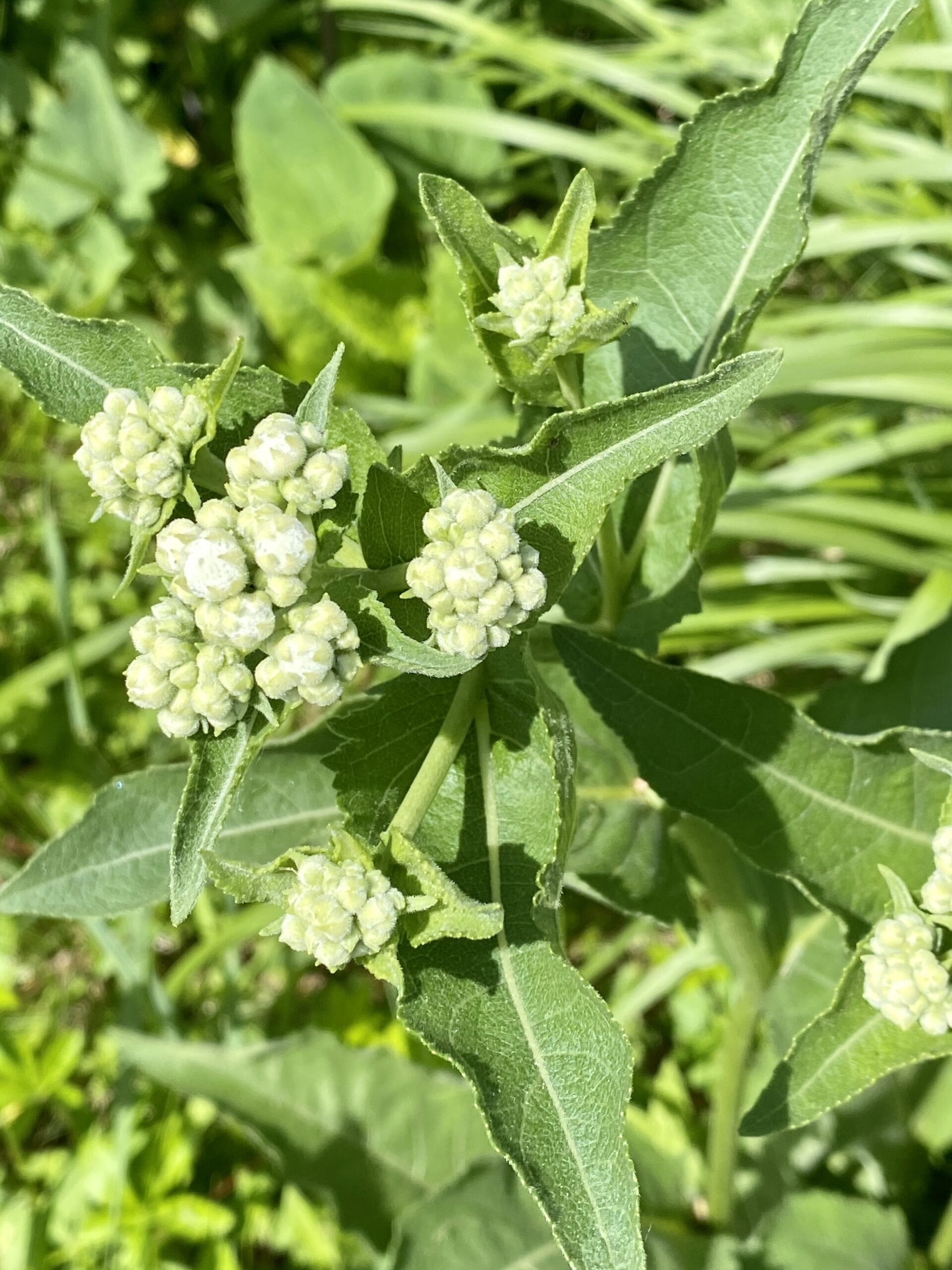
Wild quinine is an upright, clump-forming perennial, typically found in dry areas of prairies, savannas, upland forests, or limestone glades. It grows 3–4 feet tall, with a spread of 2–4 feet. The leaves are medium green, somewhat aromatic, and sandpapery in texture with tiny hairs. At the base of the plant, the leaves at have long stalks and rounded teeth; while along the stems, the leaves are sessile with sharp teeth. Wild quinine boasts unique woolly-looking, white flower heads, clustered in flat inflorescences on top of stout stalks. Usually, several inflorescences will be bunched loosely together on a given plant. Each flowerhead is about 1/3 inch across, consisting of 5 or 6 very short-petaled, ray florets encircling a central disk of many tiny, white to cream, tubular florets. The overall look is like a miniature head of cauliflower!
The flowers bloom from late spring to mid-summer, lasting about 2 months, and eventually turning to seed. In fall, the sturdy inflorescences on stout stalks turn dark brown—when left standing, provide architectural interest into winter.
Mammalian herbivores (deer, rabbits) generally ignore this plant, because the leaves are sandpapery in texture and bittertasting.
Wild quinine grows best in full sun, preferring medium, well-drained soil conditions—although it will tolerate clay, rocky soils, and drought. Use in pollinator gardens, prairies, naturalized meadows, or forest margins. This plant will spread by rhizomes and self-seeding. Thin every few years if space is limited. Its cut flowers, fresh or dried, make a lovely addition to bouquets, since they are long-lasting, holding up nicely.