Description
Purple Meadow Rue, Thalictrum dasycarpum
QUART POT
Light: Sun, Part Sun
Moisture: Moist
Soil: Sand, Loam
Height: 2–6 ft
Bloom Season: Late May–July
Bloom Color: White
Benefits: Bees
Notes:
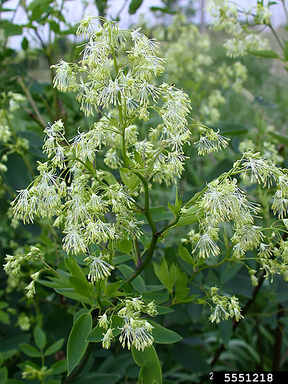
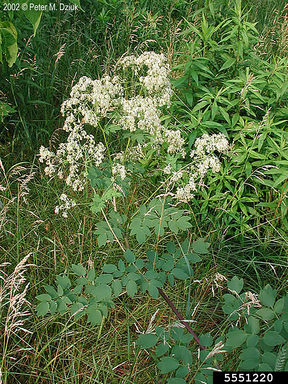
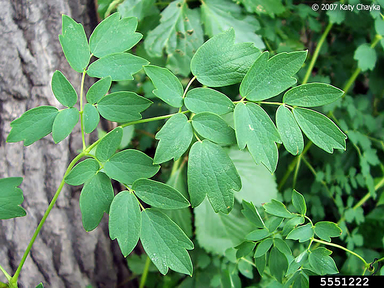
Purple Meadow Rue is a delightful native perennial, 2–6 ft. high, that features blue-green lacy foliage (somewhat resembling columbine) and wiry-branched sprays of tiny, white flowers which bloom for 2–3 weeks in early summer.
The mass effect of the tiny flowers is quite showy! Emerging in loose, large clumps of soft, almost feathery sprays, the flower heads can be a foot or more long, but have no true petals. Mostly dioecious (male/female flowers on separate plants), the male flowers are more fluffy with numerous yellow, thread-like stamens that droop out and become entangled. The female flowers are pollinated by wind and develop into spindle-shaped seeds that turn brown at maturity.
A member of the buttercup family Ranunculaceae, Purple Meadow Rue has an upright central stem that is unbranched below, but becomes branched above. The stems are usually purplish. The leaves are hairy beneath, alternate and compound: divided into numerous, three-lobed leaflets which become smaller as they ascend the stems.
In the wild, Purple Meadow Rue is found in deciduous riparian woods, damp thickets and ravines, and moist prairies. Bees are sometimes attracted to the abundant pollen of the male flowers. However, this plant is not cross-pollinated by insects as the female flowers do not have nectar. There are a select few insect species that feed on this plant, including some aphids and caterpillars of certain moths. White-Tailed Deer browse the foliage sparingly.
Purple Meadow Rue can provide contrast and color to any garden. Easy to grow, it prefers dappled sun, well-drained but moist conditions, and sandy to loamy soil. It is also good as a cut flower.
Photos: Peter Dziuk, Minnesota Department of Agriculture Bugwood.org